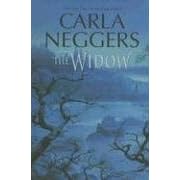
Abigail Browning's husband Chris was killed four days after their wedding. Seven years later she starts receiving anominous phone calls about his death. Being a homicide detective now, she has gotten nowhere in the past with her husband's murder. Abigail decides to return to Maine, the place where Chris was murdered. No one in the town wants her there, and they don't want her stirring up old memories. The only friends she has there is an old Detective named Lou Beeler, and the hunky neighbor that found her husbands body, Owen Garrison. Abigail continues to get phone calls from a stranger, gets attacked, and has items left on her doorstep that lead her to believe she is getting close to the killer. The book was slow getting started, but the ending was good, and some of the characters really made the book. At least this book had an ending without a lot of loose ends. Good Read!
Showing posts with label W. Show all posts
Friday, December 7, 2007
WILD FIRE, by Nelson DeMille
Have you ever had to sit through a meeting that you thought would never end? A meeting where staying awake seemed to be a Herculean task? In Wild Fire the bad guys have a meeting near the beginning of the novel. You, the reader, have to sit there and listen to them discuss their plans that go on until page 127. First they can't decide the day of the week for their big event. That takes some pages. Then they can't decide what cities to stage it in. More long discussions ensue. When we finally stagger out of that marathon session we join John Corey and his long suffering wife. She's his FBI boss, and he works for the anti terrorism task force. His response to everything she says (and to what anyone else in the novel says) is a smartass wisecrack. How does she put up with it? Well the two of them talk a lot, and drive around a lot tracking down the Bad People. Well they can't do that 24/7 so they get drunk at night in their hotel. The plot moves along (slowly) until our chatty couple finally meets up with the Chief Bad Person. This happens about 50 pages before the ending of the book, and if you want to save time you can just stop reading the book and go to sleep. Those last 50 pages contain writing that is pure clichéd formula. You know just how everything is going to turn out. It is really totally by the numbers stuff. There are no plot twists and turns, no surprises, just hack writing. Oh yes, when Mr. DeMille runs out of clever dialog he just has his characters say "F*&^% You" to each other. There's a lot of that actually. What can I say? Nelson DeMille is (was?) one of my favorite writers, but this novel has to be one of his poorest works.
Wednesday, December 5, 2007
THE WAR, by Geoffrey C. Ward.
The War, the companion volume to Ken Burns' documentary, looks at first glance like the coffee table book of the season. It is, but only in the sense that, given its size, a coffee table might be the most practical place to read it. And The War, which lands in bookstores this week, should be read by everyone, from high schoolers, many of whom, as Burns points out in his introduction, "think we fought with the Germans against the Russians in the Second World War," to baby boomers, who think they know what their parents went through.
Unique not only among previous Burns companion volumes but among all books on World War II, The War pursues two main currents: the stories of four American towns during the war years and the bigger picture of both the European and Pacific fronts. The course of the war is never allowed to become too distant a subject. When battles are linked to the lives of the men who served and their friends and family in Waterbury, Conn.; Mobile, Ala.; Luverne, Minn.; and Sacramento, Calif., history becomes the stuff of personal drama.
Geoffrey C. Ward, prize-winning biographer of Franklin Roosevelt and author of companion volumes for three other Burns films, including The Civil War, handles the historical narrative deftly. What, one wonders, is left to say about this war? The answer is not so much new information as new interpretation.
Ward is tougher than almost any recent historian on the generals and war planners whose decisions were responsible for such massive blunders as the feeble defense of the Philippines in 1942 and the landing at Anzio in Italy in 1944. And the reader will be, too, when men we have come to know die needlessly.
Ward juxtaposes major events with illuminating details. In Mobile, for instance, both country music legend Hank Williams and the father of home-run hero Hank Aaron worked in the same shipyard, the kind of integration that would not have happened if not for the war effort.
But it's the personal side of the book, the stories of the common people from these towns and many others, including Japanese-Americans who went off to fight the Nazis while their parents lived behind barbed wire in interment camps, that pulls the reader in.
Their stories are told through newspaper articles, old photographs, letters to and from the front and, sometimes, most heart-rending of all, home movies that family members have kept for more than 60 years. They are also told, in many instances, by the participants themselves. All of these serve to re-create a time when Americans got their war news from the morning papers and radio rather than television and the Internet.
We find out the fate of soldiers, sailors and airmen as their loved ones find out. Each new death — usually delivered in the form of a Western Union telegram — hits the reader with the jolt of an emotional rifle slug (the reproduction of one such telegram provides one of the book's starkest photos).
Part history, part memoir and part photo album, The War is compelling on many levels. The photographs are a mesmerizing collection of both the war the GIs saw and the changing world they left behind. Many are so upsetting that for a long time they were known only to the men who took them: In the Ardennes Forest, American soldiers try to distinguish between our dead and the enemy in a pile of frozen corpses; in Dresden, a German town destroyed by Allied bombs, dead men, women and children are heaped in piles more than six feet tall; Marines on Okinawa stand around a radio looking stricken as they hear the news that the war in Europe is over. When will their war be over?
Much of The War will hit the uninitiated with a shock. Readers will begin to understand why fighter pilot Quentin Aanenson could never return to his father's farm in Minnesota. "I find there are times when I'm pulled back into the whirlpool," he says. "The intensity of that experience was so overwhelming that you can't let go of it."
Unique not only among previous Burns companion volumes but among all books on World War II, The War pursues two main currents: the stories of four American towns during the war years and the bigger picture of both the European and Pacific fronts. The course of the war is never allowed to become too distant a subject. When battles are linked to the lives of the men who served and their friends and family in Waterbury, Conn.; Mobile, Ala.; Luverne, Minn.; and Sacramento, Calif., history becomes the stuff of personal drama.
Geoffrey C. Ward, prize-winning biographer of Franklin Roosevelt and author of companion volumes for three other Burns films, including The Civil War, handles the historical narrative deftly. What, one wonders, is left to say about this war? The answer is not so much new information as new interpretation.
Ward is tougher than almost any recent historian on the generals and war planners whose decisions were responsible for such massive blunders as the feeble defense of the Philippines in 1942 and the landing at Anzio in Italy in 1944. And the reader will be, too, when men we have come to know die needlessly.
Ward juxtaposes major events with illuminating details. In Mobile, for instance, both country music legend Hank Williams and the father of home-run hero Hank Aaron worked in the same shipyard, the kind of integration that would not have happened if not for the war effort.
But it's the personal side of the book, the stories of the common people from these towns and many others, including Japanese-Americans who went off to fight the Nazis while their parents lived behind barbed wire in interment camps, that pulls the reader in.
Their stories are told through newspaper articles, old photographs, letters to and from the front and, sometimes, most heart-rending of all, home movies that family members have kept for more than 60 years. They are also told, in many instances, by the participants themselves. All of these serve to re-create a time when Americans got their war news from the morning papers and radio rather than television and the Internet.
We find out the fate of soldiers, sailors and airmen as their loved ones find out. Each new death — usually delivered in the form of a Western Union telegram — hits the reader with the jolt of an emotional rifle slug (the reproduction of one such telegram provides one of the book's starkest photos).
Part history, part memoir and part photo album, The War is compelling on many levels. The photographs are a mesmerizing collection of both the war the GIs saw and the changing world they left behind. Many are so upsetting that for a long time they were known only to the men who took them: In the Ardennes Forest, American soldiers try to distinguish between our dead and the enemy in a pile of frozen corpses; in Dresden, a German town destroyed by Allied bombs, dead men, women and children are heaped in piles more than six feet tall; Marines on Okinawa stand around a radio looking stricken as they hear the news that the war in Europe is over. When will their war be over?
Much of The War will hit the uninitiated with a shock. Readers will begin to understand why fighter pilot Quentin Aanenson could never return to his father's farm in Minnesota. "I find there are times when I'm pulled back into the whirlpool," he says. "The intensity of that experience was so overwhelming that you can't let go of it."
Tuesday, December 4, 2007
WORLD WITHOUT END, by Ken Follett.
I do a lot of traveling. Maybe you do too. Usually when I go places, it’s on an ordinary day, with not much happening. I’m going to experience day-to-day life in that location. I don’t make a habit of visiting places specifically for big events --- you’ll never catch me in New York City on Thanksgiving for the big parade, or Washington, D.C. for a Presidential inauguration, or anywhere there’s a political convention, Olympic Games or a big carnival. I’m not that kind of tourist. But there are plenty of you who are --- those who want to be at the big events, who are drawn to the crowds and the excitement. And that’s fine, as long as you don’t expect me to go with you, because I’ll be just as happy staying at home and watching it on TV, with chips, salsa and Dr. Pepper close at hand. None of us has access to time travel, but if we did, I expect that it would be the same way. I would go back in time, like a shot, but I’d be lining up to go to English country houses in the 1930s, or taking a first-class trip on an ocean liner in the Gilded Age, or something else elegant and fun, with good cooking and good company close at hand. Some of you, however, would be lining up to go to Gettysburg or Super Bowl III or some other major historical event, just to see what it was like.In WORLD WITHOUT END, Ken Follett has written a big book --- big enough to make both types of people happy. This work of historical fiction spans events in the English city of Kingsbridge from 1327 to 1361. Kingsbridge was the site of Follett’s previous excursion into the medieval world, the majestic THE PILLARS OF THE EARTH, and he returns to it two centuries later, changed in many ways but still recognizable.Most of the charm of the first book came from the richness of detail in everyday medieval life, with Follett providing a guided tour through the monastic, courtly and architectural worlds of the 12th century. In WORLD WITHOUT END, he performs much the same service for the 14th century, documenting the intrigues of the increasingly corruptible prior of the Kingsbridge monastery, the rise in power of the merchant class, and the intricacies of bridge-building and cathedral redesign. The novel explains and explores the entire feudal system, from the lowly serf to the battle tactics of the English nobles, and does so not just comprehensively but in a comprehendible way.However, Follett is not just interested in the day-to-day realities of medieval Europe. He takes his characters to the Battle of Crecy, one of the turning points in the Hundred Years War, showing both the high strategies of the opposing generals and the suffering of the wounded troops on both sides. The 14th century was also the start of the Black Death in Europe, and Follett’s cast of characters --- although severely depleted by the disease --- must figure out strategies for coping with the widespread death and destruction caused by its foul spread.Where WORLD WITHOUT END slips out of the medieval world is in its protagonists, who aren’t modern, necessarily, but certainly have attitudes that are recognizably modern. Follett’s favorite characters in both Kingsbridge books are the innovators, people in the medieval world who recognize the transformational power of technology. In THE PILLARS OF THE EARTH, his characters built fulling mills and flying buttresses. Much of the focus in WORLD WITHOUT END is on rebuilding the 12th-century infrastructure while making advances in other technologies like cloth-making and medicine. (Follett is especially scathing about the use of ancient Greek medical techniques used by his monks as opposed to scientifically-based methods developed and disseminated by his nuns.) The book of course is chock-full of plots and counterplots and long-buried secrets, but it is also about how the people of the medieval era began the process of setting the modern world into motion.Follett’s novel is a long tour of medieval England, meandering and convoluted at times but always enthralling and powerful. It is the perfect book for any long trips you might have scheduled, no matter why you’re planning on going where you’re going.
Sunday, December 2, 2007
WHAT TO EXPECT WHEN YOU’RE EXPECTING, by Heidi Murkoff, Arlene Eisenberg and Sandee Hathaway
Introducing a completely Revised & Updated Third Edition of America's bestselling pregnancy book, What to Expect When You're Expecting. Two years in the making, it's a cover-to-cover, chapter-by-chapter, line-by-line revision and update.
Incorporating the most recent developments in medicine, and responding to the many queries and letters received from readers, the book contains both the most accurate information available, and the most reader-friendly. The Third Edition includes more information on working while pregnant. It offers more in-depth coverage of complementary and alternative birthing. Greater attention is paid to pre-conception, alternative families, second pregnancies, HMOs, the role of the father, and lifestyle. There's a completely new look at the Best-Odds diet, which is better suited to the needs of busier women with less time. An updated cover and all-new black-and-white illustrations give the classic a fresher look.
THE WORLD ALMANAC AND BOOK OF FACTS 2008, edited by C. Alan Joyce
Description A staple in homes, libraries, and offices everywhere, The World Almanac and Book of Facts delivers authoritative information you can trust. With a 140-year tradition of editorial accuracy, The World Almanac and Book of Facts contains hundreds of thousands of facts from only the most reliable sources, and each year features topical articles by well known figures such as Coretta Scott King, Wendy Wasserstein, and Mr. Fred Rodgers. Including over 1,000 pages of information compiled by a full-time team of editors and a handy quick reference index, The World Almanac and Book of Facts puts information at your fingertips.
The 2008 edition of The World Almanac and Book of Facts includes updated information on every topic, from the every day to the obscure. Whether you''re doing your taxes, watching the news, doing a crossword, or settling a discussion, The World Almanac and Book of Facts serves as a dependable desk-reference. Topical features and a ?Year In Pictures? section also make The World Almanac and Book of Facts a great scrap-book of the previous year. For students, reporters, infomaniacs, or anyone seeking accuracy, The World Almanac and Book of Facts remains the most trustworthy, easy-to-use source.
?My #1` reference work for facts.? -- Will Shortz, The New York Times Crossword Editor
?For the most information in one source, The World Almanac remains the champion.? -American Library Association
?The World Almanac is the most useful reference book known to modern man.? ?Los Angeles Times
?An institution ? The range of records and data the book collects is staggering.? Dallas Morning News
?It''s the best in the business.? ?Manchester Union Leader
WIFE FOR HIRE, by Janet Evanovich
Hank Mallone knows he's in trouble when Maggie Toone agrees to pretend to be his wife in order to improve his rogue's reputation. Will his harebrained scheme to get a bank loan for his business backfire once Maggie arrives in his small Vermont town and lets the gossips take a look?
Maggie never expected her employer to be drop-dead handsome, but she's too intrigued by his offer to say no . . . and too eager to escape a life that made her feel trapped. The deal is strictly business, both agree, until Hank turns out to be every fantasy she ever had.
WATER FOR ELEPHANTS, by Sara Gruen
Water for Elephants by Sara Gruen opens with a day of disaster at the circus and Jacob Jankowski admitting he kept a secret from that day for over 70 years. The novel then moves to the ninety-something year old Jacob in a nursing home. As the older Jacob fights to survive the indignities of old age he recounts the story of his life with the Benzini Brothers Most Spectacular Show on earth.
Water for Elephants moves between the story of the traveling circus in 1930 to the story of the older Jacob’s fight to maintain sanity. While most of Water for Elephants is about the circus, the chapters about the older Jacob provide a depth to the novel and a poignancy to the story that makes the whole book richer and more real.
Gruen researched circuses and animal behavior extensively before writing Water for Elephants. Her careful work manifests itself in writing that is descriptive, easy-to-read and made me feel as if I were part of the circus community. From the whistle of the train to the burn of moonshine against the back of the throat, Gruen engages all the reader’s senses.
I fell in love (and hate) with many of the characters as well. As the adventure and details of Jacob’s secret unfolds, it is impossible not to become attached to Jacob, Walter, Bobo, Rosie, Marlena.
I highly recommend Water for Elephants.
Subscribe to:
Posts (Atom)